One Ticket In, No Ticket Out: The Americans Who Came to Ulaanbaatar and Never Left
Jessica Hartley landed at Chinggis Khaan International Airport with a 14-day itinerary, a well-worn backpack, and absolutely no intention of staying. That was four years ago. These days, she runs a small English-language tutoring practice out of a café in Sukhbaatar District, speaks conversational Mongolian, and genuinely cannot explain, in any clean or satisfying way, why she's still here.
"People ask me that all the time," she says, stirring her suutei tsai — the salted milk tea she initially hated and now drinks by the liter. "And I always start to answer, then kind of trail off. Because the real answer is messy."
Jessica isn't alone. Across Ulaanbaatar, a loosely connected network of American expats has quietly taken root — teachers, NGO workers, entrepreneurs, artists, and a surprising number of people who just... stayed. Their stories share a strange common thread: the city grabbed them in ways they didn't anticipate and held on.
The 'Two More Weeks' Spiral
Talk to enough long-term expats and a pattern emerges. Almost nobody planned to become one. The trajectory usually starts the same way: a short trip extends by a few weeks, then a month, then a season. Before long, they're signing a lease.
Marcus Webb, a former marketing consultant from Portland who has lived in Ulaanbaatar for three years, describes it as a slow gravitational pull. "I kept thinking, 'I'll leave when I feel like I've figured this place out.' But UB doesn't let you figure it out. Every time you think you understand it, it shifts on you. That's addictive in a way I didn't expect."
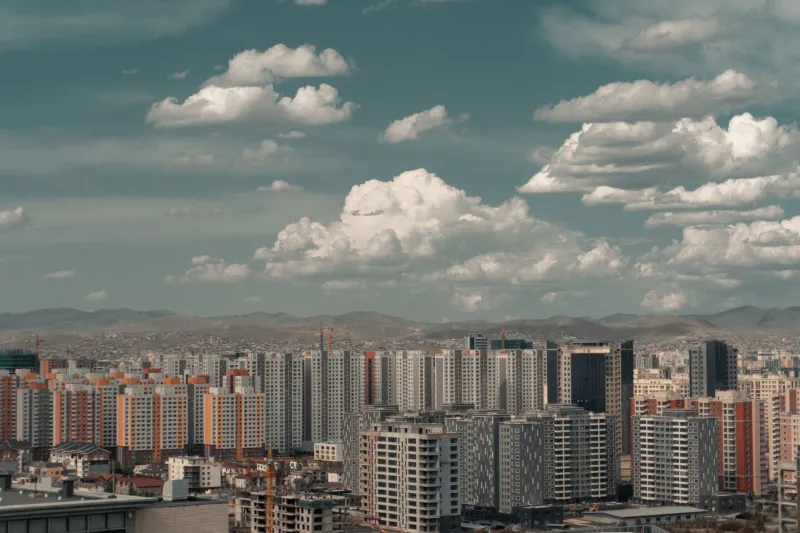
Psychologists who study expatriate behavior sometimes call this the "incompleteness loop" — the brain's tendency to stay engaged with puzzles it hasn't solved. Ulaanbaatar, with its layered contradictions (ancient nomadic culture colliding with Soviet-era infrastructure colliding with 21st-century ambition), is essentially an unsolvable puzzle. The city keeps handing you new pieces.
What the City Takes Away — and What It Gives Back
For many American expats, the initial adjustment to Ulaanbaatar is genuinely brutal. The air quality in winter ranks among the worst in the world. The traffic is a special kind of chaos. Bureaucratic processes can feel opaque to the point of absurdity. Grocery runs sometimes require three separate stores.
And yet, somewhere in that friction, something shifts.
"Back in Chicago, I had every convenience imaginable and I was miserable," says Dana Cho, a graphic designer who relocated to Ulaanbaatar after a work trip in 2021. "Here, I have to actually solve problems every day. Real ones. And it turns out I'm pretty good at that. I didn't know that about myself before."
This theme — self-discovery through discomfort — comes up constantly in conversations with long-term American residents. The city strips away the cushioning that modern American life provides and forces a kind of resourcefulness that many describe as clarifying, even liberating.
"You find out what you actually need versus what you just assumed you needed," Marcus says. "Turns out the list of things I actually need is pretty short."
The Community Nobody Warned You About
One of the least-discussed aspects of expat life in Ulaanbaatar is the quality of the social connections that form there. The city's international community is small enough that people genuinely know each other — not in the performative networking way of a big American city, but in the way that neighbors in a small town know each other. There's an intimacy to it that many Americans find disorienting at first, then deeply comforting.
"In New York, I had 600 Instagram followers and felt completely alone," says Jessica. "Here, I know maybe 40 people really well. And I mean really well. We've helped each other through sickness, through breakups, through visa nightmares. That's a different thing entirely."
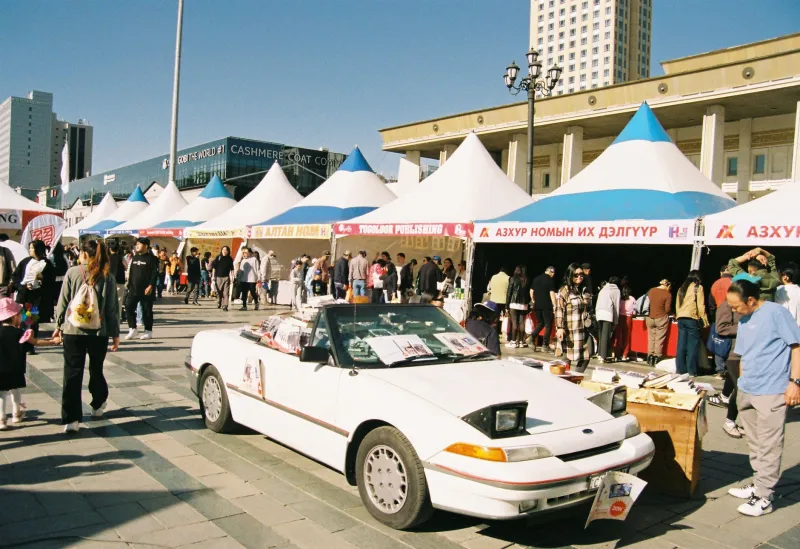
The relationships expats form with Mongolian locals add another dimension. Mongolian hospitality — the kind that involves being invited into someone's ger for tea within minutes of meeting them — creates a social warmth that many Americans describe as unlike anything they've experienced at home. The cultural value placed on community and mutual support quietly rewires how expats relate to the people around them.
"Mongolians taught me how to actually be a neighbor," Dana says simply.
The Mirror Effect
Therapists who work with expat communities often note that living abroad functions as an accelerant for self-awareness. Removed from the context in which you've always understood yourself — your career identity, your family role, your social script — you're forced to reckon with who you are underneath all of that.
Ulaanbaatar seems to intensify this effect. Maybe it's the starkness of the landscape visible from the city's edges, the wide Mongolian sky that makes everything feel simultaneously vast and clarifying. Maybe it's the culture's deep relationship with impermanence — nomadic life, by definition, doesn't cling to fixed ideas about place or identity. Whatever the mechanism, expat after expat describes arriving in Ulaanbaatar with one understanding of themselves and gradually developing another.
"I came here thinking I was a pretty confident, self-sufficient person," Marcus admits. "And then I spent six months being completely humbled by a city I didn't understand. That was uncomfortable. It was also the best thing that ever happened to me."
What This Means for Visitors
You're probably not moving to Ulaanbaatar. That's fine. Most people don't. But the expat experience points to something that even short-term visitors can tap into: this city rewards engagement over observation.
The travelers who leave Ulaanbaatar genuinely changed — not just impressed, but actually changed — are almost universally the ones who leaned into discomfort rather than managing it from a safe distance. They accepted tea invitations. They got lost without immediately reaching for Google Maps. They asked questions and sat with the silence before the answer came.
Ulaanbaatar isn't a city that performs for tourists. It doesn't have a neatly packaged version of itself to sell you. What it offers instead is something rarer: the chance to encounter a place that is completely, almost aggressively itself — and in doing so, to encounter a version of yourself that your regular life keeps neatly out of view.
"I thought I was coming to see Mongolia," Jessica says, finishing her tea. "Turns out I was mostly coming to see me."
She pauses, looks out the café window at the street — a bus idling in traffic, a woman in a traditional deel walking beside a guy in a Supreme hoodie, the mountains just barely visible through the haze at the city's edge.
"Anyway," she adds. "I'm not done yet."