Centuries and Selfies: Ulaanbaatar's Gloriously Chaotic Identity
Let's get one thing straight before you land at Chinggis Khaan International Airport: Ulaanbaatar is not going to behave itself. It's not going to fit neatly into whatever mental image you packed in your carry-on. The city is ancient and brand-new at the same time, deeply spiritual and aggressively wired, nomadic in its soul and cosmopolitan in its ambitions. If that sounds like a contradiction, that's because it absolutely is — and somehow, impossibly, it works.
Visitors from the US tend to arrive expecting something in between a remote wilderness outpost and a generic post-Soviet city. What they get instead is a place that feels like someone shuffled five different centuries together, dealt them out at random, and said, "Good luck."
The Architecture Tells the Whole Story
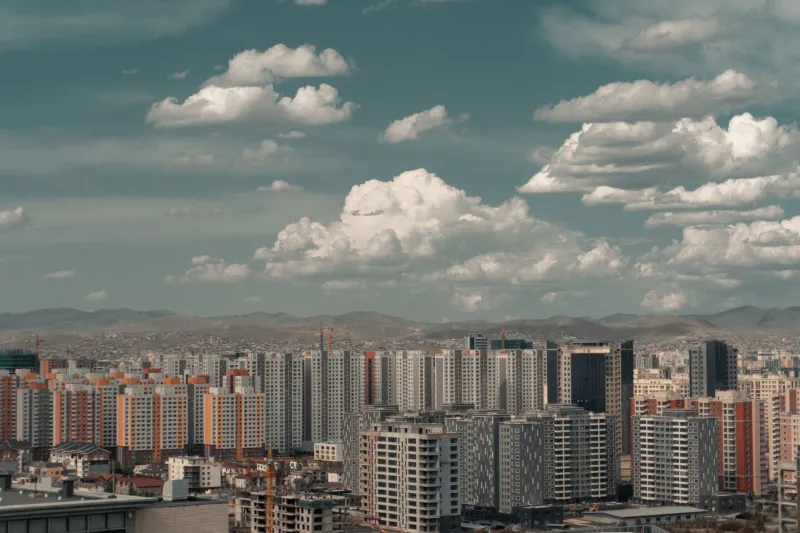
Start with the skyline, because it says everything. Sukhbaatar Square — the city's symbolic heart — is flanked by a grand neoclassical government palace that wouldn't look out of place in Moscow circa 1950. Turn 90 degrees and you're staring at glass-and-steel towers that could've been airlifted in from Seoul or Dubai. Walk a few blocks in any direction and you'll stumble into a ger district, where circular felt tents sit on unpaved lots with satellite dishes perched on top.
This isn't urban planning — it's urban archaeology. Each layer of the city represents a different chapter of Mongolian history, and none of them have bothered to move out for the next tenant. The Soviet footprint is impossible to miss: wide boulevards, blocky apartment buildings, and public spaces designed for state pageantry rather than human comfort. But crammed right up against all that concrete are traditional wooden fences, Buddhist stupas, and the occasional horse tied to a parking meter. (Okay, the horse is rare. But it happens.)
For American visitors used to cities that at least pretend to have a coherent aesthetic, this mashup can feel genuinely disorienting at first. Give it 48 hours. The disorientation fades and gets replaced by something better: fascination.
When the Ancient and the Algorithm Collide
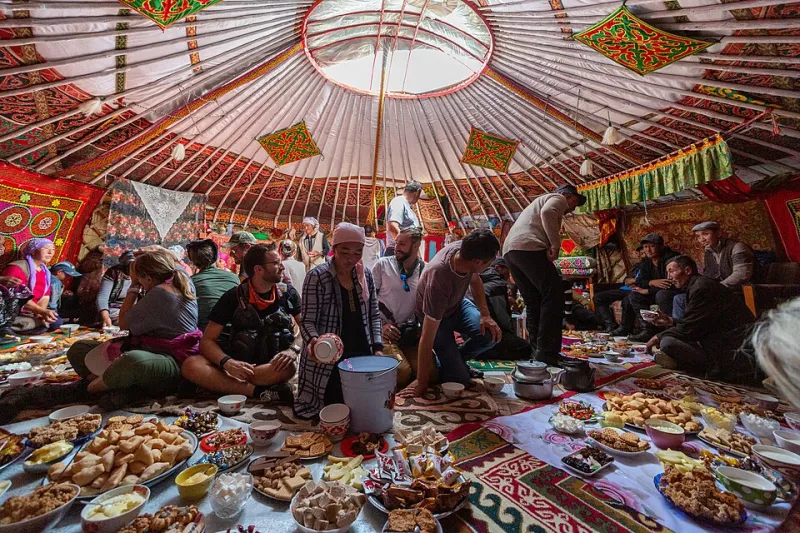
Here's where things get really interesting. Mongolia has one of the world's oldest continuous nomadic cultures. The traditions surrounding horsemanship, hospitality, and the lunar calendar aren't museum pieces here — they're lived practice. Naadam, the summer festival celebrating the "Three Games of Men" (wrestling, archery, and horse racing), draws the entire country together every July with the kind of collective energy that you just don't manufacture.
And yet, Mongolia also has one of the highest rates of cryptocurrency adoption in Asia. Ulaanbaatar's startup scene is legitimately buzzing. Young Mongolians who grew up watching the internet reshape the rest of the world have decided, fairly reasonably, that geography shouldn't hold them back. The result is a city where a shaman might perform a morning ritual blessing while, two floors above, a developer debugs a blockchain application before lunch.
This isn't irony for its own sake. It's what happens when a culture that survived for millennia on adaptability meets the 21st century head-on. Mongolians are, historically speaking, very good at figuring out how to make things work in difficult conditions. The digital economy is just the newest version of that.
Spirituality With a Strong Wi-Fi Signal
Buddhism runs deep in Ulaanbaatar, and Gandantegchinlen Monastery — usually just called Gandan — is the beating heart of that tradition. Built in the early 19th century, it's an active place of worship with hundreds of monks in residence. The air smells like incense and butter lamps. Pilgrims circle the main temple clockwise, spinning prayer wheels. It's genuinely moving, even if you have zero personal connection to Tibetan Buddhism.
What gets you is what's happening just outside the monastery gates. There's a busy street market. Taxis honk. Someone's blasting K-pop from a phone speaker. A woman in a traditional deel robe walks past a teenager in Supreme. The sacred and the mundane exist in immediate, unapologetic proximity here, and neither one seems particularly bothered by the other.
That coexistence is, arguably, the most Mongolian thing about Ulaanbaatar. There's no hard line between the spiritual and the everyday, no designated zone for tradition and another for modernity. It's all happening at once, in the same square mile, sometimes in the same building.
What Residents Actually Think About All This
Ask a local about the city's contradictions and you'll get one of two reactions: a knowing laugh, or a slightly puzzled look, as if you've pointed out that water is wet. For many Ulaanbaatar residents — especially those who grew up here — the layering of old and new isn't jarring. It's just Tuesday.
Younger Mongolians, in particular, tend to hold both identities with remarkable ease. They'll celebrate Tsagaan Sar (the Lunar New Year) with elaborate family rituals that haven't changed in generations, then spend the rest of the week gaming online, watching Netflix, and meeting friends at a specialty coffee shop in the city's increasingly hip Zaisan neighborhood. The idea that these things are in tension is more of an outside perspective than an inside one.
Older residents sometimes express more ambivalence. The pace of change in Ulaanbaatar over the last three decades has been genuinely staggering. The city's population has ballooned. The skyline keeps shifting. Some of what made the city feel like itself has gotten bulldozed to make room for something shinier. That's a real grief, and it's worth acknowledging.
Why the Chaos Is Actually the Point
Travel has a way of flattening places — reducing them to a highlight reel of photogenic moments and easily digestible cultural summaries. Ulaanbaatar resists that flattening with everything it's got. The city is messy, surprising, and occasionally maddening in the best possible way.
The traffic is brutal. The air quality in winter is genuinely rough (pack accordingly). Some of the infrastructure feels like it's held together with optimism and duct tape. But the food is more interesting than you expect, the people are warmer than you'd believe, and around every corner there's something that makes you stop and think: I have never seen anything quite like this before.
That's the real gift Ulaanbaatar offers. Not Instagram backdrops. Not a tidy cultural experience. But a living, breathing city that is actively working out who it is — and doing so with an energy that's completely its own.
Come with flexible expectations and a decent coat. The rest will take care of itself.