Don't Be That Tourist: A Practical Guide to Mongolian Etiquette for Americans
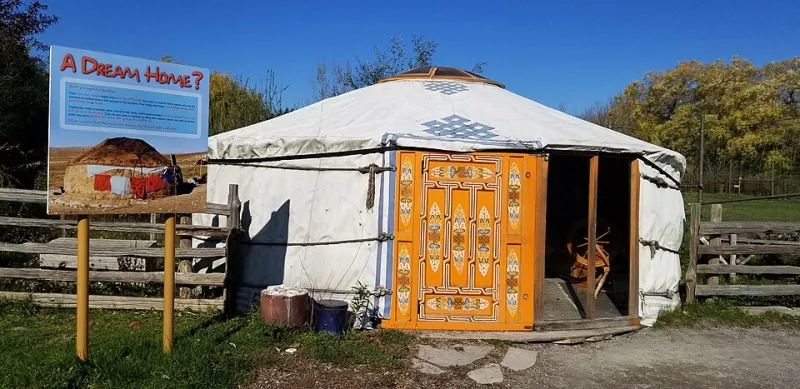
Photo: Silver Dovelet, CC BY-SA 4.0, via Wikimedia Commons
Mongolian hospitality is legendary — locals will invite you in, feed you, and make you feel like family within minutes of meeting you. But that warmth comes with a set of unwritten social codes that most American visitors have never heard of. Knowing the basics before you arrive isn't just polite — it's the difference between a surface-level trip and experiences that will genuinely stay with you.
This isn't a list of rules designed to make you anxious. Think of it more like the cultural briefing a well-traveled friend would give you over coffee before your flight. Most Mongolians are forgiving of honest mistakes made by visitors — but showing up with awareness signals respect, and respect opens doors.
The Art of Accepting (and Offering) Food and Drink
If there's one cultural norm you absolutely need to internalize before arriving in Ulaanbaatar, it's this: when someone offers you food or drink, you accept it. At minimum, you take it with both hands (or with your right hand supported at the elbow by your left), bring it to your lips, and acknowledge the gesture. You don't have to drink the whole bowl of airag (fermented mare's milk) if it's not to your taste — but refusing outright, especially with a dismissive wave, reads as rude in a way that's hard to recover from.
This matters most in ger settings, where offering food and drink to guests is a deeply ingrained expression of respect and welcome. Turning it down flat is essentially saying you don't value the relationship being offered. Take the bowl. Taste it. Smile. That's the whole move.
On the flip side, if you're visiting someone's home or ger, bringing a small gift — a box of cookies, some candy, or a modest food item — is genuinely appreciated. You don't need to show up with anything elaborate. The gesture itself is what counts.
Inside a Ger: The Spatial Rules You Need to Know
Traditional Mongolian gers are organized according to a spatial logic that has been consistent for centuries. Understanding a few basics will keep you from making awkward missteps:
- Enter and move to the left (west) side. The right (east) side of the ger is traditionally the men's side; the left is for women and guests. As a visitor, move left when you enter unless directed otherwise.
- Never step on the threshold. The doorstep of a ger is considered sacred. Step over it, not on it. Every time.
- Don't walk between the central fire (or stove) and the family's altar at the back. The back of the ger (north side) is the honored position. The central stove is the heart of the home. Walking between them is considered disrespectful.
- Don't lean against the structural poles or support columns. These are load-bearing in more ways than one — they carry cultural significance as well as the weight of the roof.
- Sit where you're invited to sit. Don't sprawl out or rearrange yourself without reading the room.
If you're doing a ger stay as part of your trip — and you really should — your host will likely be patient with an honest mistake. But knowing these things in advance shows a level of care that Mongolian hosts genuinely notice and appreciate.
Greetings, Titles, and the Handshake Question
Mongolians are not, by default, a huggy culture with strangers — at least not in the way many Americans are. A firm handshake is the standard greeting in urban Ulaanbaatar, especially in professional or first-meeting contexts. Among younger locals who've had international exposure, things are a bit more relaxed.
When meeting elders or people in positions of respect, the snuff bottle exchange is a traditional greeting you may encounter. If someone offers you their snuff bottle, accept it with your right hand (or both hands), hold it briefly, and return it the same way. You don't need to actually sniff the tobacco — the exchange itself is the point.
Using titles matters here more than it does in the US. Address older people respectfully and don't jump straight to first names unless invited to. In Mongolian naming convention, the family name comes first — so "Bat Erdene" means Erdene is the given name and Bat is the father's name. Don't assume Western naming order.
The Stove Is Sacred — Literally
Fire holds deep spiritual significance in Mongolian culture, rooted in shamanist traditions that predate Buddhism's arrival in the region. In practical terms, this means:
- Never throw trash into a stove or fireplace. Ever. This is a serious taboo.
- Don't point your feet toward the fire. Keep them tucked or positioned to the side.
- Don't step over or across any cooking fire, even outdoors.
These aren't quirky customs — they're expressions of a worldview in which fire is a living, sacred element. Treating the stove carelessly is roughly equivalent to defacing something holy. It will genuinely upset your hosts.
On Photography and Personal Space
Ulaanbaatar is a photogenic city, and the temptation to document everything is real. But a few things to keep in mind:
Always ask before photographing people, especially monks, elderly individuals, or anyone in traditional dress. The answer is often yes — Mongolians are generally not camera-shy — but asking first is the respectful move. Don't photograph the interior of temples or monasteries without checking for posted rules or asking staff. Some sacred objects and spaces are off-limits to cameras entirely.
In the city generally, personal space norms are somewhat different from what Americans expect. Public spaces like buses and markets can be physically crowded without it feeling rude. Don't read closeness as aggression — it's just density.
Alcohol, Toasts, and Knowing When to Slow Down
Vodka plays a significant social role in Mongolian hospitality culture, particularly among men. If you're at a social gathering and toasts are being made, you'll likely be included. Participate if you drink; if you don't, simply holding the glass and touching it to your lips during a toast is acceptable. Refusing to engage at all can feel like a rejection of the social moment.
That said, getting sloppy drunk in front of your hosts is not the vibe. Mongolians can drink seriously, and keeping pace shot-for-shot with a determined local is a game you probably won't win. Pace yourself, stay present, and enjoy the conversation.
The Bottom Line
None of this is complicated once you internalize the underlying logic: Mongolian hospitality is generous, and the customs that surround it exist to honor that generosity. When you accept food with both hands, step carefully over the threshold, and take a moment to learn someone's actual name — you're not just following rules. You're signaling that you came to connect, not just to consume.
That distinction matters everywhere. In Ulaanbaatar, it can turn a good trip into an unforgettable one.