Lost in Translation: Surviving (and Laughing Through) Ulaanbaatar's Language Gap

Photo by Photo by Desmond Leung on Unsplash on Unsplash
Let's get this out of the way immediately: you are not going to pick up Mongolian during a two-week trip. You might memorize sain baina uu (hello) and bayarlalaa (thank you), mispronounce both of them spectacularly, and still get a warm smile from a local who genuinely appreciates the effort. That's actually a pretty good summary of what navigating the language barrier in Ulaanbaatar feels like — awkward, funny, occasionally frustrating, and weirdly heartwarming.
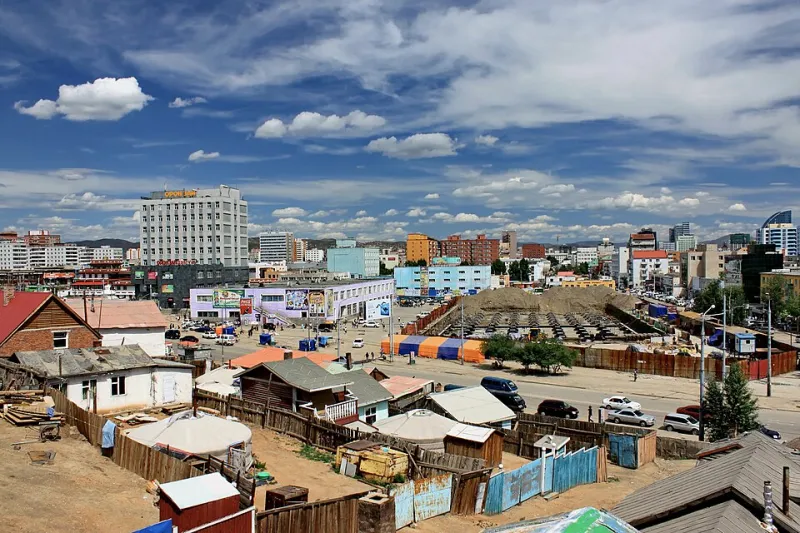
For American travelers used to the assumption that English will eventually appear on a menu or a street sign, Ulaanbaatar offers a humbling recalibration. The city is modernizing fast, and English proficiency is growing, especially among younger residents and anyone working in tourism. But step outside the central Sukhbaatar District, wander into a local canteen, or try to ask a taxi driver for directions to a specific monastery, and you'll quickly realize that a translation app and a sense of humor are your two most essential travel accessories.
The Curious State of English in Ulaanbaatar
English exists in Ulaanbaatar the way a patchwork quilt exists — functional, colorful, and occasionally baffling in its construction. Restaurant menus are a particular highlight. You'll encounter dishes described as "boiled meat happiness," "sheep interior soup" (accurate, if not appetizing), and the occasional item labeled simply "Mongolian thing." These translations aren't wrong, exactly. They're just wonderfully literal, the product of someone running Mongolian through an online translator and trusting the output completely.
Signs are similarly adventurous. One popular guesthouse near the city center once advertised "comfortable sleepings and warm foods." A spa menu offered "full body relaxation with stone hotness." You get the idea. The intention is always clear; the execution is what keeps travel bloggers employed.
What this means practically is that you should approach written English in Ulaanbaatar as a puzzle rather than a reliable guide. Read it, appreciate it, take a photo for your group chat, and then try to confirm what you're actually getting before you commit.
Where Google Translate Will Let You Down
Here's the thing about Mongolian: it's an Altaic language with a completely different grammatical structure than English, and machine translation has not fully cracked it. Google Translate handles Mongolian better than it did five years ago, but it still stumbles on context, tone, and anything involving indirect communication — which, in Mongolian culture, is a lot.
Mongolians tend to communicate with a certain indirectness that can confuse Americans, who are generally trained to expect a direct yes or no. If you ask a local whether a particular road is passable and they respond with something like "it could be difficult in some conditions," that almost certainly means no. If a restaurant host says "we can try to make that," assume they're out of that dish. Translating the words is one thing; translating the cultural subtext is another skill entirely.
Also worth noting: Mongolian Cyrillic script is what you'll see on most signage. The Latin alphabet version of Mongolian exists but isn't dominant, so even if you've memorized a few phrases phonetically, reading them off a sign is a separate challenge. Download a Cyrillic keyboard on your phone before you leave home — it'll make typing place names into maps significantly less painful.
Practical Strategies That Actually Work
So how do you actually get around? A few approaches that travelers have found genuinely useful:
Screenshot everything. Before you leave your hotel, screenshot the address of your destination in Mongolian Cyrillic. Show it to your driver or a local. This single habit eliminates probably 70% of transportation confusion.
Use visual menus whenever possible. Many mid-range restaurants in Ulaanbaatar now have photo menus, and pointing is universally understood. If there's no photo menu, asking the server to show you what another table ordered works surprisingly well and often leads to a better meal than whatever you would have ordered anyway.
Learn the numbers. Mongolian numbers are phonetically manageable, and knowing them helps enormously when negotiating prices at markets or confirming costs in taxis. Even getting to five or ten in Mongolian will get you a visible uptick in goodwill.
Find your hotel's business card immediately. The moment you check in, grab a card with the hotel's name and address written in Mongolian. Keep it in your pocket for the entire trip. This is old-school advice, but it's saved countless travelers from a very long, very cold walk.
Download offline maps. Google Maps works in Ulaanbaatar, but data connections can be unreliable outside the city center. Download the area offline before you venture out.
The Unexpected Bridges
Here's what nobody tells you about the language barrier in Ulaanbaatar: it creates some of the best travel experiences you'll have.
When words fail, something else fills the gap. A guesthouse owner who can't explain a local festival in English will pull out her phone, play a YouTube video, and sit beside you watching it with obvious pride. A market vendor who doesn't understand your question will call her teenage daughter on speakerphone to translate, turning a simple transaction into a ten-minute family event. A taxi driver who speaks zero English will blast traditional Mongolian folk music for the entire ride and glance at you in the rearview mirror to gauge your reaction, grinning when you nod along.
Mongolians are, by and large, patient with tourists who are clearly trying. The bar for "trying" is low — a genuine smile, a mispronounced greeting, a willingness to look slightly ridiculous while pointing at things. Meet that bar and you'll find that communication happens in ways that don't require a shared vocabulary.
A Note on Translation Apps in Real Time
The camera translation feature in Google Translate is legitimately useful for menus and signs. Hold your phone camera up to a Mongolian text, and you'll get an imperfect but often workable English overlay. Treat it as a rough draft, not a final answer.
For spoken conversation, the voice translation features work better in quiet environments than noisy ones — a problem in a busy restaurant or a bustling market. If you're in a pinch, typing your question and showing the screen tends to be more reliable than speaking into the app and hoping the audio comes through clearly.
Papago, a translation app popular across Asia, has reportedly better Mongolian support than Google Translate for some users. It's worth having both installed before you land.
The Bottom Line
The language gap in Ulaanbaatar is real, occasionally inconvenient, and genuinely part of what makes the city feel like an adventure rather than a package tour. You will order the wrong thing at least once. You will end up in the wrong neighborhood at least once. You will have a conversation that consists entirely of gestures and shared laughter and somehow arrive at a mutual understanding.
Those moments? They're the ones you'll actually remember. Pack your patience, download your offline maps, grab that business card from the front desk, and lean into the beautiful chaos of communicating across a language barrier in one of the world's most distinctive cities.